Clinicians, nurses, and specialists who review reports and use them to validate diagnoses and interventions.
Developers of AI agents and platforms that process data and entities that use the data for risk assessment and managing healthcare costs.
Members – The primary users providing data and receiving personalized health insights.
Dynamic health profiles, risk predictions (e.g., for diabetes or heart disease), and personalized preventive action plans.
We have established a strong baseline in technical capabilities, but critical gaps remain in human-centric implementation
how to bridge the gap between technical metrics and real-world human impact.
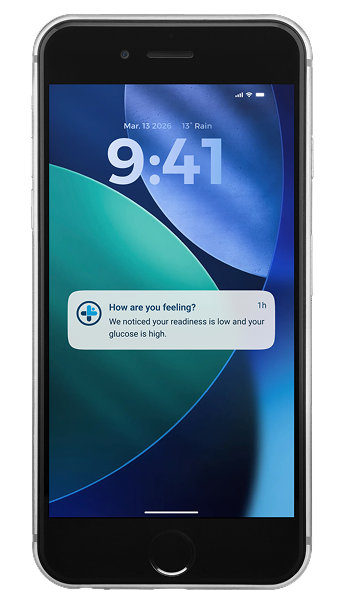
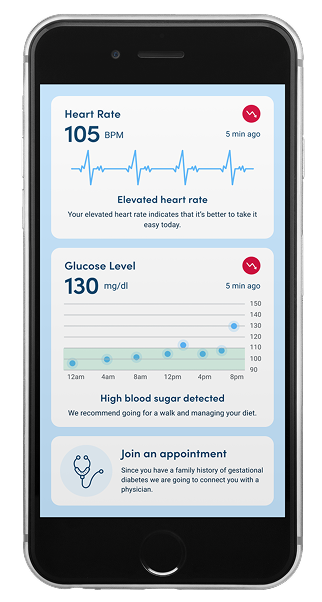
Immediate Intervention by triggering alerts when real-time sensors detect anomalies.
leveraging generative AI to transform health data into individualized profiles are expected by 2030.
Immediately with a discovery and scoping phase, as the industry has transitioned from experimental pilots to full-scale adoption. the "official" launch depends on regulatory and technical milestones.
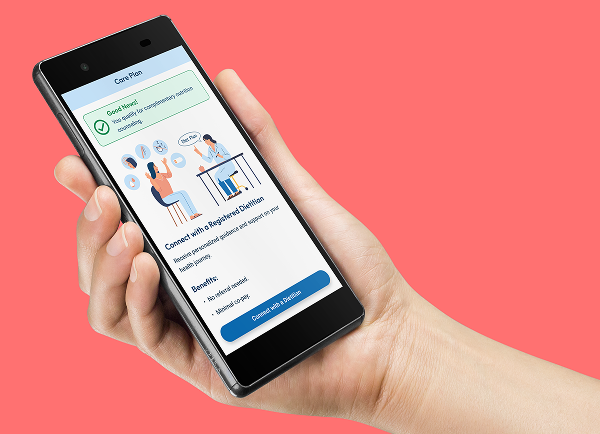
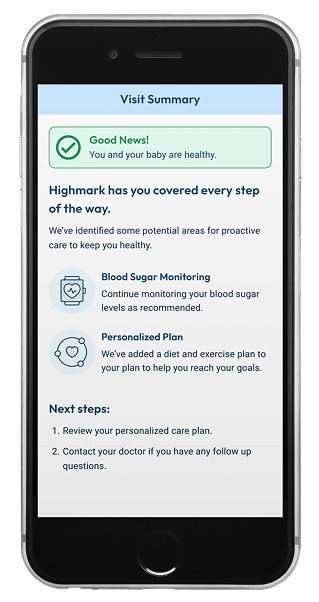
Users receive data notifications but face a UX dead-end where the device provides no guidance on immediate next steps or risk levels.
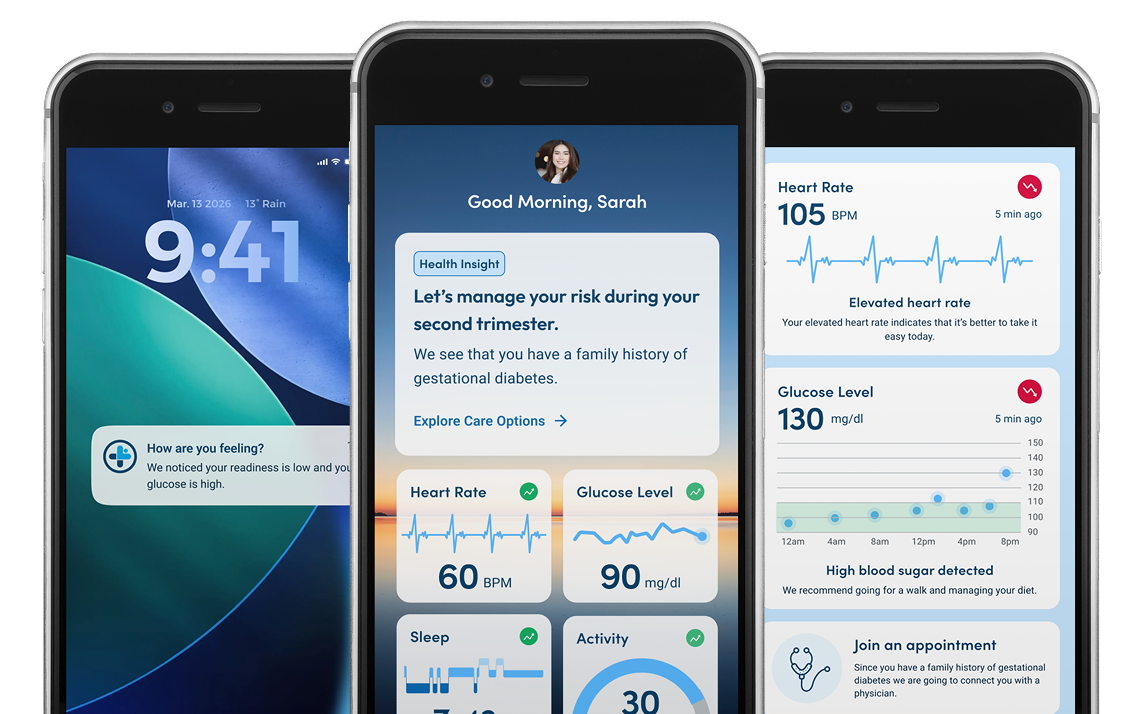
Wearable Hubs where the AI first "translates" raw sensor data into proactive nudges.
Dexcom and Abbott leverage AI in continuous glucose monitors (CGMs) to predict dangerous glycemic events and recommend immediate dietary or insulin adjustments.
The lack of dynamic, AI-driven health profiles is a critical problem because it sustains a reactive "sick-care" model rather than a proactive "health-care" model.
To improve outcome we need early detection of risks and higher patient adherence to personalized preventive regimens.
it requires a "perfect storm" of technical, regulatory, and human alignment that hasn't fully converged.
Today, the transformation of health data into dynamic profiles is shifting from isolated experiments to fully integrated clinical workflows.
Bridging the interoperability gap enables the sale of "validated data streams" to insurers and healthcare providers looking to invest in proven risk reduction.
Solving this involves a multi-layered technical and human-centered approach that bridges the gap between biometric data and clinical actionability.
| Actions | Awareness | Consideration | Decision | Service | Loyalty |
|---|---|---|---|---|---|
| Customer Actions | Realizes need for better health tracking; sees ads for AI-driven health monitoring. | Researches AI privacy & accuracy; compares different wearable integrations. | Downloads app; consents to real-time data sharing; sets health goals. | Receives daily AI-generated risk profiles & preventive suggestions. | Adjusts lifestyle based on AI insights; shares success with others. |
| Touchpoints | Social media; health blogs; doctor’s office brochure. | App Store reviews; product website FAQ; community forums. | Onboarding screens; data permission pop-ups; profile setup. | Push notifications; in-app health dashboard; AI chatbot alerts. | Weekly health reports; milestone badges; referral rewards. |
| KPIs | Click-through rate (CTR); Brand awareness score. | Feature comparison time; User sentiment in reviews. | Conversion rate; Time to complete onboarding. | Prediction accuracy; Daily active users (DAU). | Churn rate; Net Promoter Score (NPS). |
| Business Goals | Build a pipeline of interested, health-conscious users. | Establish trust in AI-driven medical predictions. | Drive high-quality user acquisition and data consent. | Improve long-term patient outcomes via preventive care. | Maximize lifetime value (LTV) and brand advocacy. |
| Teams Involved | Marketing; Content Strategy. | Product Marketing; Legal/Compliance. | UX/UI Design; Engineering (Onboarding). | Data Science; Clinical Advisory Board. | Customer Success; Community Management. |
| Mediums | Mobile, Web. | Mobile, Web. | Mobile. | Mobile, Wearable. | Mobile, Email. |
| Opportunities | Partner with wellness influencers to showcase real-life AI benefits. | Provide transparent "Explainable AI" snippets for better trust. | Use GenAI to personalize onboarding flow based on user's initial inputs. | Leverage LLMs to translate complex medical data into easy-to-read advice. | Create a predictive "What-if" health simulator for long-term goal setting. |
Analyzing the customer journey map reveals several critical insights into how generative AI and real-time health data can revolutionize patient care.
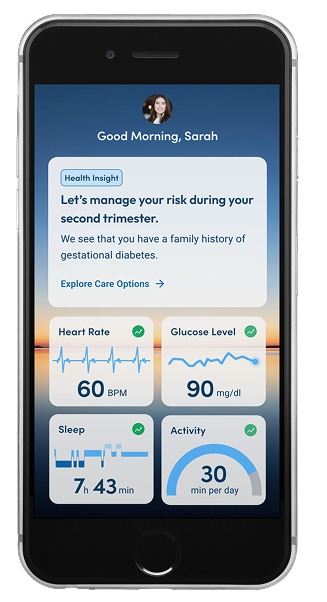
Generative AI analyzes real-time biometric data (e.g., heart rate, sleep patterns) to predict personal risks like cardiovascular issues or burnout before symptoms occur.
Unlike static reports, these dynamic profiles continuously update based on the latest data from wearable devices.
The system doesn't just show data; it generates personalized "next-best actions," such as specific dietary changes or exercise adjustments, to improve long-term outcomes.