Member Engagement Guides (MEGs) who are managing high-volume caseloads of individuals with complex, chronic health conditions.
Direct participants, Operational & Strategic Stakeholders, and Product & Technology Teams
Member Engagement Guides (MEGs), Individuals with Chronic Conditions, and Healthcare Organizations.
A Generative AI Synthesis Layer that replaces manual data hunting with a unified, conversational summary of the patient’s longitudinal history.
MEGs struggle to manually synthesize vast amounts of member data to provide truly personalized, proactive support in real-time.
Will Guides use the tool voluntarily, or will it feel like a "big brother" monitoring their performance?
During critical "moments of truth"—when a member's health status changes, a gap in care is identified, or a high-cost intervention is imminent.
Platforms have demonstrated a 50% increase in care manager productivity and a 25% increase in overall efficiency shortly after deployment.
Limited Live Pilot (3 months) Deploy the assistant to measure initial "Time-to-Insight" gains.
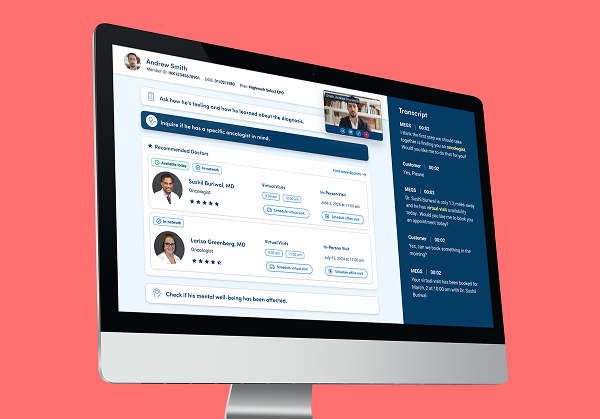
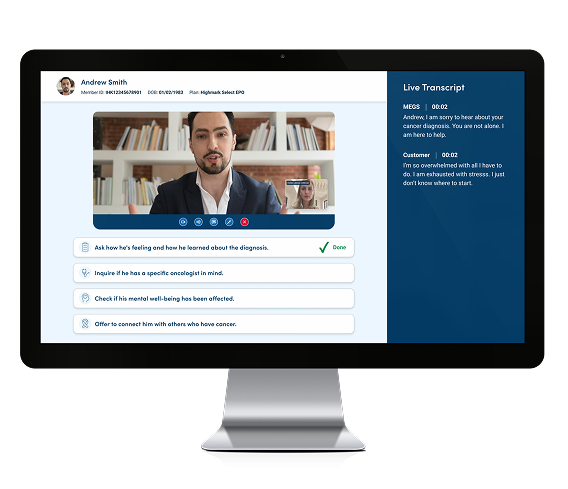
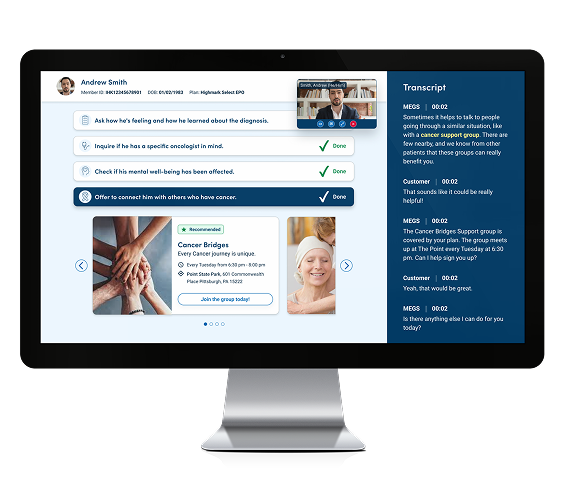
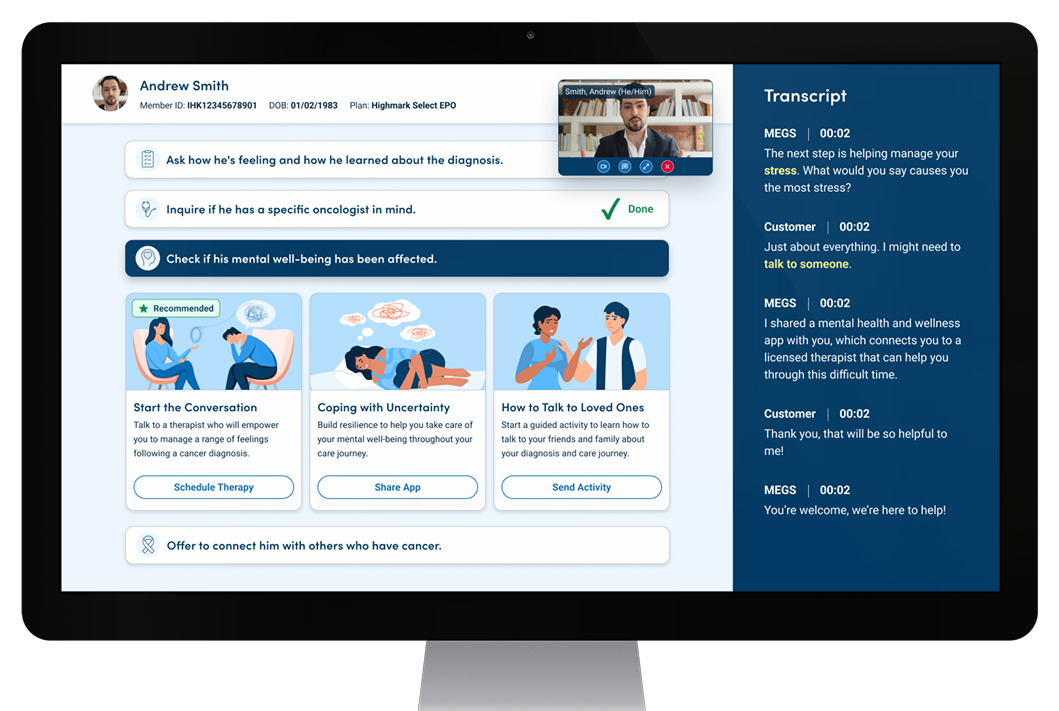
Within the care coordination platform/dashboard used during live member interactions and longitudinal follow-ups.
A digital interface that provides live transcription and "next best action" prompts during active member calls.
Quantum Health: They use GenAI and Natural Language Processing (NLP) to detect real-time "health signals" during member conversations.
Manual synthesis is slow and prone to oversight, leading to generic advice, missed opportunities for early intervention and rising medical costs.
AI is necessary to scale empathy, allowing one Guide to provide high-quality, personalized support.
Healthcare organizations still struggle with legacy interoperability issues. Critical data is often scattered across hundreds of disconnected systems that even the most advanced AI model cannot fix.
Member Engagement Guides (MEGs) are using a generic outreach model to engage members.
A massive opportunity to shift healthcare from reactive to proactive, Instead of replacing humans, GenAI creates a "Super-Guide" who possesses an instant, 360-degree memory of every member.
By integrating Generative AI to analyze health data, identify immediate needs, and suggest personalized conversational "nudges" or care plans.
| Actions | Awareness | Consideration | Decision | Service | Loyalty |
|---|---|---|---|---|---|
| Customer Actions | Member searches for symptoms or notices health changes. | Member reviews care options and insurance benefits | Member chooses to engage with a Care Guide. | Member receives personalized care plans and ongoing support. | Member maintains improved health and sticks with the plan. |
| Touchpoints | Search engines, health blogs, member portal. | Guide outreach, benefits dashboard, care coordination tools. | Welcome call, initial guide consultation. | Coordinated care visits, follow-up messages, AI health alerts. | Regular wellness check-ins, renewed plan enrollment. |
| KPIs | Engagement rate on portal, search volume. | Click-through rate on care recommendations. | Conversion rate to care coordination. | Member well-being scores, reduction in medical spend. | Member retention rate, Net Promoter Score (NPS). |
| Business Goals | Identify at-risk members early. | Drive members to high-value care options. | Reduce friction in the care onboarding process. | Optimize clinical outcomes and minimize waste. | Foster long-term trust and emotional loyalty. |
| Teams Involved | Marketing, Data Science (AI model prep). | Product, Data Integration, Care Support. | Care Guides, Operations, Clinical Staff. | Care Guides, Clinical Oversight, IT Support. | Customer Success, Product, Member Experience. |
| Mediums | Mobile, Web. | Mobile, Web. | Mobile, Web. | Mobile, Web. | Mobile, Web. |
| Opportunities | Predictive Insights: AI identifies trends before symptoms worsen. | Hyper-Personalization: AI matches member needs to specific guides. | Real-time Synthesis: Guides receive instant summaries of member history. | Dynamic Orchestration: AI adjusts care plans based on real-time data. | Anticipatory Care: AI predicts future needs to keep members healthy. |
Analyzing the customer journey map reveals that leveraging Generative AI transforms health management from a reactive model into a proactive, continuous, and highly personalized care system.
Up to 30% improvement in patient satisfaction through predictive care.
Potential to unlock a portion of $1 trillion in industry value by reducing administrative waste and medical errors.
Significant reduction in "no-shows" (up to 34%) by predicting and preventing missed appointments.