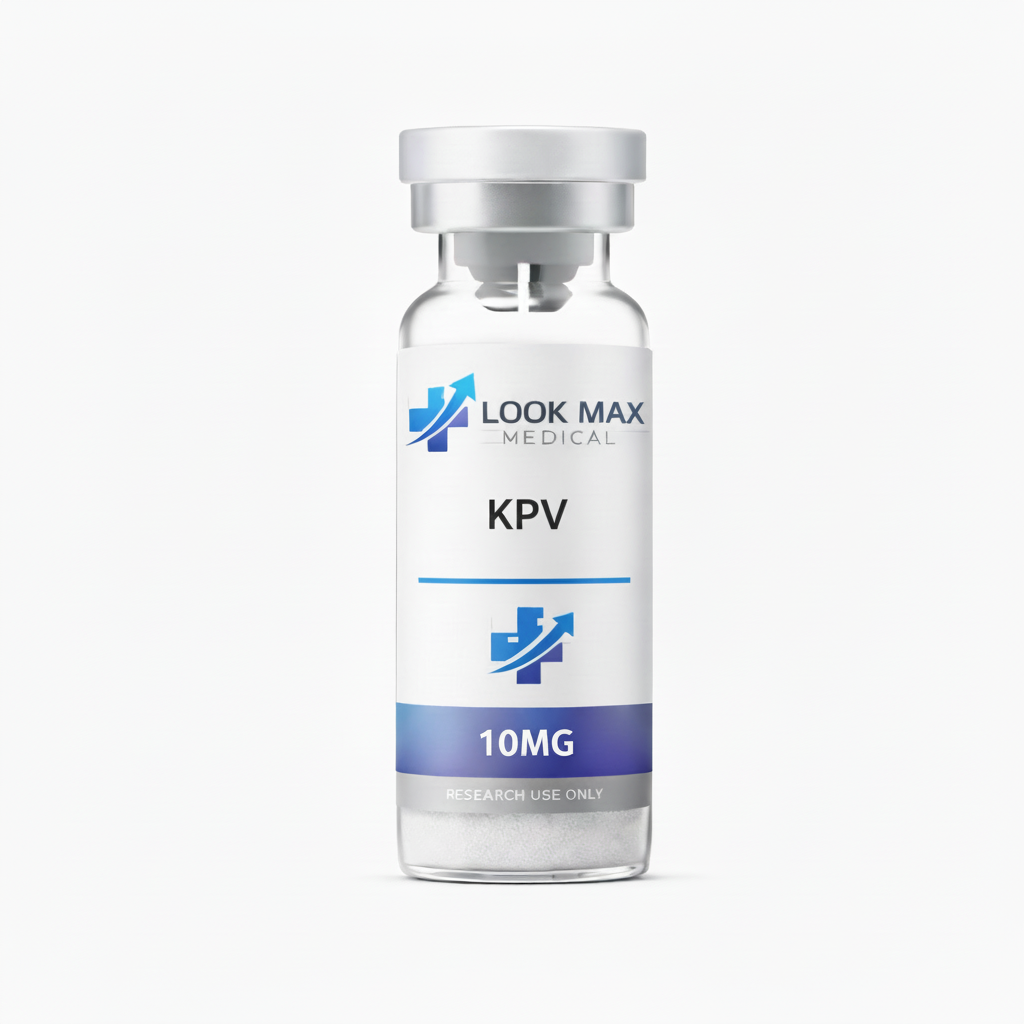
Anti-Inflammatory
KPV
KPV peptide with potent anti-inflammatory properties.
Dosage
-
Dosage 10mg
-
Volume 2ml
$89.99
Product Care
Store in a cool, dry place away from light. If Constituted, Please Refrigerate. For longer term storage, freezing at -20°C is recommended to maintain integrity.
Product Note
All products are shipped in lyophilized or powder form and must be reconstituted to a liquid for research and testing. We are unable to provide any dosing instructions. All peptides are for research use only. We're an expert biotechnology company that provides high quality peptides and products for purchase to advance scientific research in this field.
Long-Acting Growth Factor
IGF-1 LR3 — Research & Data
A modified form of insulin-like growth factor 1 with an extended half-life due to an arginine substitution at position 3 and a 13-amino-acid extension. IGF-1 LR3 has reduced IGF binding protein affinity, increasing bioavailability.
20-30 hrs
Half-Life
vs 12-15 min native IGF-1
Reduced
IGFBP Binding
Higher free fraction
Anabolic
Signaling
Muscle & tissue growth
PI3K/Akt
Pathway
Cell survival & growth
Mechanisms of Action
IGF-1R Activation
Binds IGF-1 receptor to activate PI3K/Akt and MAPK/ERK pathways, promoting cell proliferation and survival.
Reduced IGFBP Affinity
Arg3 substitution decreases binding to IGF binding proteins, resulting in higher bioavailable IGF-1 activity.
Anabolic Effects
Promotes skeletal muscle hypertrophy, satellite cell proliferation, and nitrogen retention in preclinical models.
Research Areas
Muscle Research
IGF-1 LR3 shows coordinate effects on both protein synthesis and breakdown in catabolic models.
Tissue Growth
IGF-1 LR3 demonstrates pronounced effects on visceral organ growth, particularly the GI tract.
Neuroprotection
Intranasal IGF-1 LR3 has been studied for its potential to delay cognitive decline in animal models.
Catabolic Reversal
IGF-1 LR3 reversed glucocorticoid-induced catabolism with 2.5x potency vs native IGF-1.
Clinical Outcomes
2.5x
Anabolic potency vs IGF-1
Anti-catabolic effects
20-30 hrs
Half-life extension
vs 12-15 min native
~10%
IGFBP binding
Increased free fraction
Regulatory Status
Important Notes
- IGF-1 LR3 is 2-3x more potent than native IGF-1 due to reduced IGFBP sequestration.
- It can cause dose-dependent hypoglycemia — glucose monitoring is essential in research protocols.
- Native IGF-1 (mecasermin/Increlex®) is FDA-approved for severe IGF-1 deficiency; LR3 is a research compound.
- IGF-1 signaling is implicated in both growth/repair AND cancer biology — use with appropriate precautions.
Safety Profile from Research
What clinical studies report
Limited human safety data specific to LR3. Native IGF-1 (mecasermin) safety data shows hypoglycemia as the most significant risk. Other reported effects include headache, injection site reactions, and jaw pain. Long-term IGF-1 elevation may carry theoretical oncogenic risk.
Common Digestive Issues
Not a primary concern. Nausea reported in <5% of native IGF-1 users.
Theoretical Concern — Hypoglycemia Risk
IGF-1 LR3 enhances glucose uptake and can cause dose-dependent hypoglycemia. Blood glucose monitoring is essential. Symptoms include tremor, sweating, confusion, and in severe cases, loss of consciousness.
Theoretical Concern — Oncogenic Potential
Sustained IGF-1R activation promotes cell proliferation and inhibits apoptosis. Epidemiological data links elevated IGF-1 levels with increased cancer risk. Research protocols should include appropriate monitoring.
Treatment Discontinuation Rates
Not well-established for LR3. Native IGF-1 trials report 5-10% discontinuation, primarily due to hypoglycemia.
Study Exclusion Criteria
Active or history of malignancy, diabetes requiring insulin, known hypoglycemia disorders, children with closed growth plates.
Researcher Notes
- Always have glucose available when administering IGF-1 LR3 in research protocols.
- Combine with food intake to mitigate hypoglycemia risk.
- IGF-1 LR3 is one of the most potent anabolic research peptides — start with conservative doses.
- Monitor blood glucose, IGF-1 levels, and general metabolic panels during research.
Published Studies
Muscle Hypertrophy Study
2005IGF-1 overexpression in muscle tissue produced significant hypertrophy and strength gains in animal models.
Extended Bioactivity
2002LR3 modification extended IGF-1 half-life from minutes to 20-30 hours with 3x greater potency in vitro.
IGF-I variants are anabolic in dexamethasone-treated rats
1992IGF-1 LR3 was 2.5-fold more potent than native IGF-1 in reversing catabolic state.
Superior potency of infused IGF-I analogues
1996IGF-1 LR3 maintained superior potency when administered by injection vs infusion.
IGF-binding proteins are multifunctional
2002Detailed mechanism of how IGFBP evasion enhances LR3 bioavailability.
Frequently Asked Questions
IGF-1 LR3 is a synthetic analogue of human IGF-1. It differs from native IGF-1 by having a substitution of Glutamine for Arginine at position 3, and a 13-amino acid extension at the N-terminus. This makes it 2-3 times more potent and significantly extends its half-life.
Yes, like native IGF-1, IGF-1 LR3 can enhance glucose uptake and potentially lead to hypoglycemia. Blood glucose monitoring is essential in research protocols involving this compound.